
“There is but one book in the world, it might be argued, that it would be better for the world to lose all others and keep this one:
The Complete Works of William Shakespeare.”
Dr Ben Johnson
We know much more about his times than we do his life. He remains hidden. Will Shakespeare learned young to stay safe in a dangerous world by keeping his public life separate from private beliefs. Yet there are many records and he was famous in his time as an actor and playwright.
It would have to be a conspiracy theory of an extraordinary and unprecedented magnitude to cover his tracks. Yet people do love a good conspiracy theory, so you’ll find every conceivable story out there about who really wrote Shakespeare.
He was a nobody from Stratford who became the greatest writer in the history of the world and many people can’t handle this, thinking that such levels of genius simply must be channeled through Oxford or Cambridge. For the many doubters William Shakespeare fails the critical test of experience and they are convinced that Stratford has made a Bard out of a country bumpkin in order to promote their town. Stratford Upon Avon is a major tourist destination today, which simply drives the conspiracy theorists crazy. They claim there is no trace of the Stratford glover’s son. They would have you believe that it was Christopher Marlow or Sir Francis Bacon or the Earl of Oxford or even Queen Elizabeth herself using the pseudonym William Shakespeare. A Shakespeare scholar in Stratford claims dismissively that: “These ignorant people are motivated by pure snobbery, thinking that only an Earl or a Duke could possibly write plays like that. You and I know what rot that is.”
His own works tell us much more of him than all the books written about him ever since and I will point him out whenever I see him crouched and concealed amid his words.
William Shakespeare was born at the perfect time. Any earlier and there would be no theatre scene for him to master and any later the same theatres would have been shut down by the Puritans during the English Civil War. Indeed, English theatre was fueled by Shakespeare and one might even say that the English Cultural Renaissance would be deplete without him.
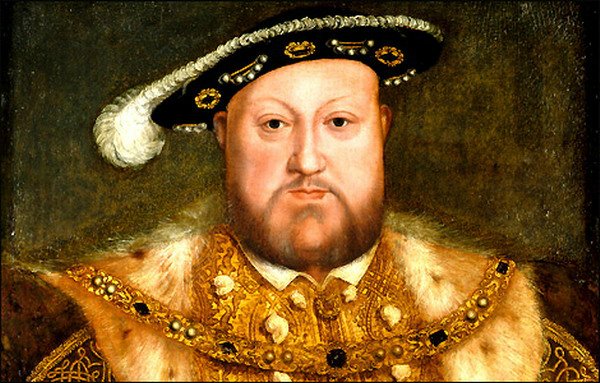
These were dangerous times for artistic expression. Queen Elizabeth’s father was Henry VIII, a robust historical figure too recent to be ignored or forgotten. Elizabeth was born of King Henry and Ann Boleyn (wife # 2 of 6) in 1533, only two years before the King broke from the Church, seizing all Catholic property and wealth and declaring his entire kingdom Protestant. A year later young Elizabeth’s mother, Ann Boleyn, was beheaded by Henry, who then proceeded to marry Jane Seymore, declaring his daughter Elizabeth to be a bastard child.
After a series of wives, beheadings and annulments King Henry VIII died in 1547, only 17 years before Shakespeare’s birth. He had sired two children besides Elizabeth: Edward (from Jane Seymour, wife # 3) and Mary (from Katherine of Aragon, wife # 1). All three of his children wore the crown. Young and sickly Edward VI, as the only son, became king and defended his father’s Protestant faith. He died six years later and Ultra Catholic Princess Mary (Bloody Mary) assumed the throne (being from wife # 1) and ushered in 5 years of terror upon the English Protestants. She married the Catholic King Philip of Spain and had over 300 Protestants burned at the stake in 1555. She had Princess Elizabeth confined to the Tower, as Protestants throughout England clamoured for her to be Queen.
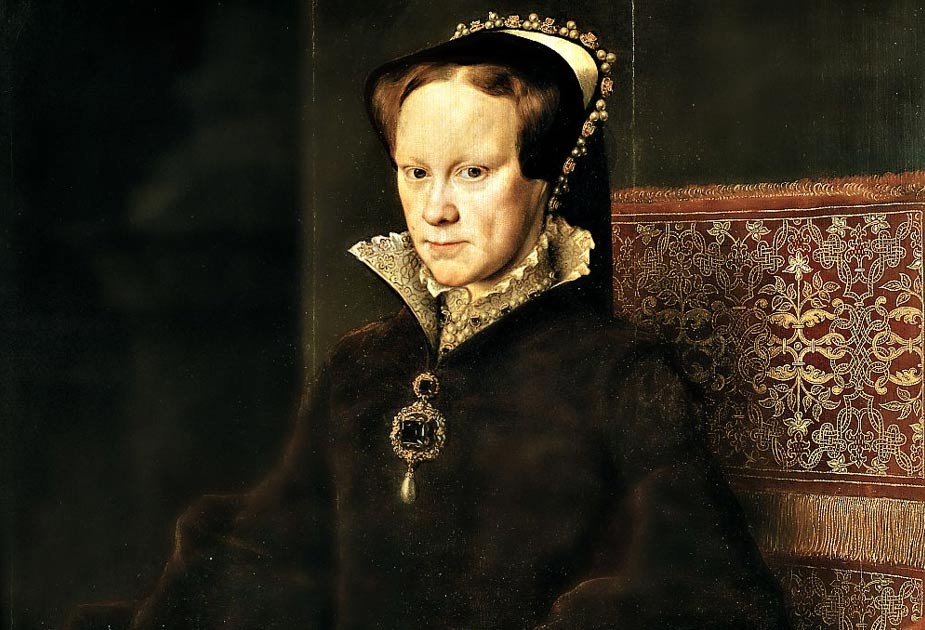
Mary’s support diminished rapidly as the country was plunged into fear and chaos. Even Philip returned to Spain. Queen Mary died in 1558 and young Princess Elizabeth, Henry III’s only surviving child, (from wife # 2) became Queen Elizabeth I in the same year that Shakespeare’s father became head constable of Stratford, a hotbed of Catholicism. Elizabeth would sleep with a dagger at her side throughout her entire 45-year reign. The Roman Catholic Church, France and Spain all proclaimed her a heretic and insisted that all English Protestants be condemned to hell. The country braced for what would come. But Elizabeth did not openly attack Catholics – she merely commanded her subjects to once again adopt her father’s Protestantism.
Catholics who quietly practiced the old faith were tolerated at first. However, this would change in the 1570s. In 1572, 8,000 French Protestants were murdered in Paris, despite Queen Elizabeth’s public intention to protect them. Then Rome, Spain and France sent a field of Jesuits to England with the intention of returning the nation to Catholicism. In 1577 they arrived with a vigor that could no longer be tolerated or ignored and Queen Elizabeth responded as reality dictated, further restricting all Catholic practices and requiring attendance at Sunday Protestant services.
This just so happens to coincide with William’s father’s troubles. John Shakespeare had progressed to the position of Mayor of Stratford and was quite successful as young William grew up. But just around the time of the Jesuit-inspired backlash against Catholics, John quit all of his posts and was fined for non-attendance at Protestant Sunday services. It is possible that he was, like so many Stratford citizens, a secret Catholic? That is supposedly the case.
The persecution only got worse until the Catholic-inspired Spanish Armada was launched against Protestant England in 1588 and Elizabeth’s response became much more intense and violent. These were extremely difficult times for ‘secret Catholics’. There were many executions and Stratford was under close watch. Edward Arden was a cousin to Shakespeare and in 1583 he was quartered, burned and had his head displayed upon a pole at London Bridge due to his apparent Catholic inspired plot to murder the Queen.
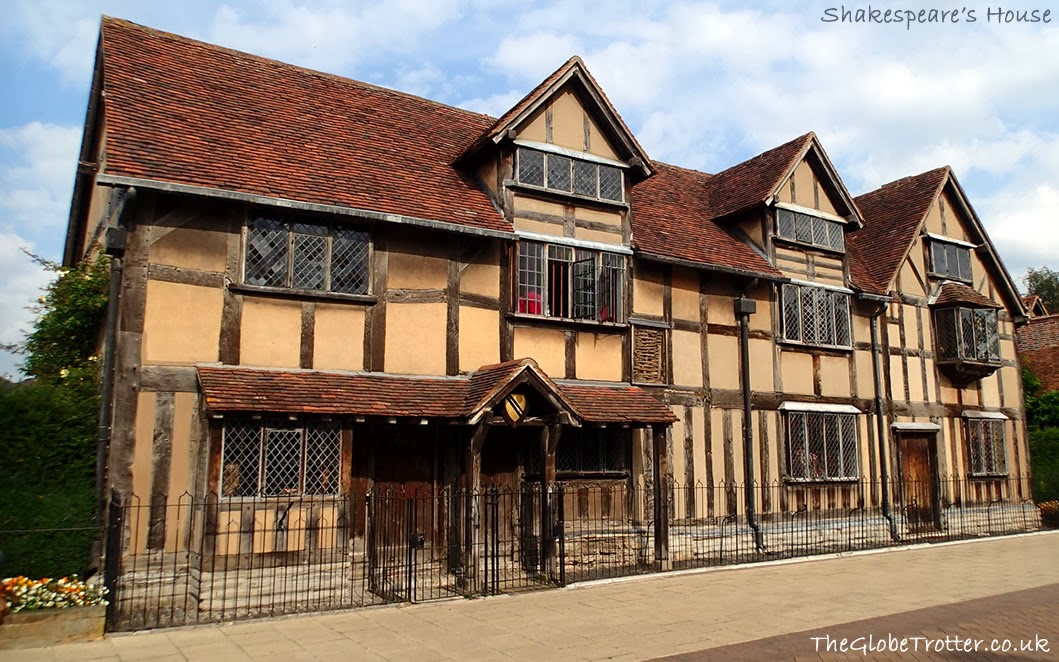
Will Shakespeare was born in Stratford in 1564, six years into the reign of Queen Elizabeth. In that same year Galileo was also born and Michelangelo died. The greatest accomplishment of Shakespeare’s life might not have been Hamlet, King Lear or The Tempest but rather the mere fact that he survived his first two plague filled years in Stratford, where two-thirds of infants succumbed to the pestilence, and one in ten citizens perished.
William was the third child born to the Shakespeares. The first two died in the plagues. Plague would remain an ever-present reality in both London and Stratford throughout Shakespeare’s life. (He likely lost his only son, Hamnet, to it, as well.) He attended a fine public grammar school from age 7-14, studying Latin and the classics. It has been said that Shakespeare’s Grammar School education, with its emphasis on Latin and Rhetoric, was equivalent to a university degree today. He attended six days a week from 6am-6pm and all of his teachers were Oxford educated. This alone significantly dispels the myth that a bright and inquisitive, hard-working and determined young grammar school student from small town (pop: 2,000) provincial Stratford could not possibly have developed into the greatest writer in the history of the English language. Many Oxford and Cambridge folks continue to struggle with this, even today. Hence the various postulations that someone more accomplished and certainly better educated must have penned all of those masterful works and merely used the name William Shakespeare as an alias.
In my lengthy and detailed study I see evidence of the real Mr. Shakespere and his immortal pen absolutely everywhere. He was certainly modest and never sought outward fame. Yet there he stands, referenced innumerable times by court, colleagues, rivals, admirers and critics of all persuasion.
He had to be a voracious reader and appeared to have loved Chaucer, Virgil, Ovid, Petrarch, Holinshed and Montaigne. When he was 14, new English translations emerged of Ovid and Plutarch, along with Holinshed’s English histories. As well, several major touring theatre companies passed through Stratford throughout his youth and he was surely mesmerized by their profession and performances. The earliest actual theatre in England opened in 1576, just two years before Will finished school. His life and the Golden Era of English Theatre line up exactly.
It also helped that Queen Elizabeth became a major supporter of theatre in general and Shakespeare in particular, despite the attempts of plague, civil disorder and the Puritans to shut down the entire profession for good. Shakespeare may have been a self-taught, hard-working young genius but these troupes of actors planted a seed that would resonate and mature with time and help produce his incomparable art. I will deal no more with the fiction of his authorship question.
From the time Shakespeare finished school in 1578 until he is seemingly found in London by about 1588 there is little documentation on his life and the speculation from age 14 to 24 is at times outrageous and consistently fabricated to suit the designs of the researcher. What we do know is that he got Ann Hathaway pregnant and married her at the age of 18 and that daughter Suzanne was born months later, followed by the twins Judith and Hamnet in the following year. Will is likely working with his father as a glover, married with 3 children at the age of 20 in 1584. It is noted later by a London colleague that this extremely bright and well-read young lad took a job in the country as a local school teacher. This is entirely possible.
We also know that The Queen’s Men came to Stratford in 1587, and that a young member of their troupe had been murdered just before playing Stratford. Evidence suggests Will could have joined up with them, filling the spot of the murdered young man, trading his domestic life for a life in the theatre. This could be the missing link between leaving Stratford as early as 1587 and arriving in London certainly by 1589. They would have toured England extensively before eventually settling in London, where a theatrical revolution was underway, led by the gay, wild, dangerous and brilliant Christopher Marlow and his fellow wits.
In 1588 the Spanish Armada attacked England and miraculously the English, with the help of bad sea conditions, repelled the attack. Had Spain defeated England, as it was expected they would, English history would never have emerged as we know it. That would have been the end of Queen Elizabeth, the end of Protestantism in England, the end of the emerging theatre scene in London, the end of the just emerging English Renaissance and the end of Shakespeare’s career just as it was beginning. He would, in fact, write his first works, in the very year following the attack by the Spanish Armada.
This was a time of utmost patriotism in victorious England and Shakespeare would soon launch into his brilliant series of English history plays, which would be extremely well received by people of every class in London and across the Isle of England during plague years. The timing could not have been better. We know that The Queen’s Men put on old versions of plays Shakespeare would learn, act in, rewrite, revise and stage in London, including Titus Andronicus, Taming of the Shrew, Hamlet, King John, Two Gentlemen of Verona, King Lear, Richard III and Henry V. This makes a good case that he left Stratford, joined the Queen’s Men as an actor and writer, settled with them in London and began his career as a playwright with the famous revisions of all of the above plays and a head full of ideas about many plays to come. William Shakespeare had found his calling.
Regardless, we know that his apprentice period was brief and that he was already well known for his re-writing of old versions of plays and the creation of fresh new works. When the plague closed the theatres for two years (1592-94) and while there was no longer a demand for plays, Shakespeare found a Lord who commissioned the Sonnets and then also penned the lengthier and popular poems Venus and Adonis and The Rape of Lucrece. This was all enough to inspire the Cambridge poet Greene to refer to Shakespeare as an ‘upstart crow’, daring to try to match the wits of Oxford and Cambridge greats like Greene, Kyd and Marlow.
When the theatres finally opened again in 1594 both Marlowe and Kid were dead and Greene sufficiently censored so that Will Shakespeare was suddenly the most notable playwright in all of London, and his most famous run of theatrical genius was just beginning at the age of 30. William Shakespeare arrived on the London scene pretty much unknown as late as 1589, apprenticed beautifully until the theatres closed in 1592, penned the greatest poetry of the English language waiting for the theatres to reopen in 1594 and then mastered his playwriting with the finest drama in all of theatre history.
The world was expanding in the times of Elizabethan England. Sir Walter Raliegh and Sir Francis Drake voyaged around the world as European rivals traversed the seas to compete with one another for world domination. Voyagers came home with fantastic tales of distant adventures and Shakespeare clearly absorbed these stories, as he did those of everything else, including law, life at court and gardening. He was the pentultimate sponge, overlooking nothing. In this dangerous world of spies, plots, insurrections and civil unrest, Shakespeare laid low and wrote his plays, always cognizant not to offend the powers that oversaw English theatres. Nearly all of the poets and playwrights of the time were brought before the government on charges of sedition. Several were imprisoned, tortured and murdered. Shakespeare was always cautious and aware. When he wrote and performed Richard II for the Queen she pulled him aside after the performance where King Richard is murdered for his throne and told him, “Master Shakespeare, you do realize that I am Richard, don’t you?”
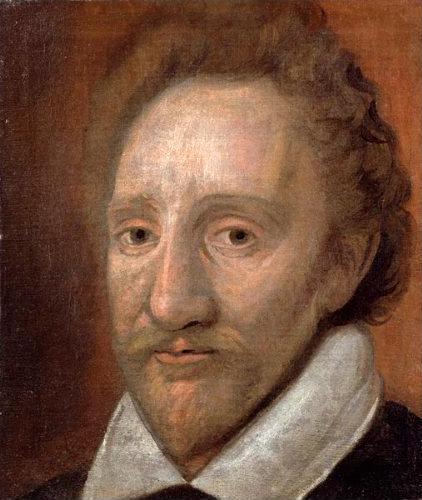
In 1594 Lord Chamberlain’s Men was formed and included the greatest actors of the day, including Richard Burbage, Will Kemp, Lawrence Fletcher, Augustine Phillips, John Heminges, Henry Condell, William Sly, Robert Armin and Richard Crowley. Will Shakespeare was hired as their in-house actor and playwright. Most of them remained together as artists for the remainder of Will’s career in theatre. And he did not disappoint as a playwright, penning A Midsummer Night’s Dream and Richard II in 1594 and then his first blockbuster tragedy, Romeo and Juliet, in 1595, just before receiving the hardest news of his life, that his only son Hamnet had died. Somehow it seemed to inspire him, as the five years following this personal tragedy witnessed the creation of Merchant of Venice, Henry IV, Parts I and II (with Falstaff), Henry V, Julius Caesar, Hamlet, As You Like It and Twelfth Night.
We know that specific events inspired certain plays. For instance, Marlow’s Tamberlaine was an enormous success, with its excessive bloodletting on the stage, which Marlow knew the audiences loved. Young Shakespeare responded with a similar experiment in Titus Andronicus, his bloodiest play. Similarly, his fellow actors firmly believed that the English people loved to witness their own history so Shakespeare studied Holinshed’s Chronicles and then proceeded to write two brilliant but separate four play historical sequences. As well, Midsummer Night’s Dream was intended for important weddings. Marlowe had another sensational hit in The Jew of Malta around the same time that the Queen’s Jewish doctor, Dr Lopez, was accused of trying to kill her and was brutally executed in public, (hung, quartered and beheaded) an event likely witnessed by Shakespeare. The following year he wrote Merchant of Venice, featuring the righteously outspoken Jewish Shylock. Of course, he was commissioned by the Queen to write Merry Wives of Windsor and I do not believe it is a coincidence that following the death of his eleven-year old only son Hamnet in 1595 he wrote King John, which contains the most devastatingly moving scene about the loss of a son he will ever pen. He also lost his father in 1601, when Hamlet was completed, ushering in the era of his immortal tragedies of Othello, Macbeth, King Lear, Antony and Cleopatra and Coriolanus. And learning about the English voyages of discovery certainly inspired the many sea faring scenes in his later plays, especially in his swan song, The Tempest. Macbeth, his Scottish play, was written specifically for the new Scottish King James I, who harboured a morbid fascination for witches.
Shakespeare became almost obsessed with power and its abuses by government authorities but in order to safely and deeply address such a delicate matter as this his most intensely analytical studies in the abuse of regal power were portrayed in scenes far from Renaissance England in plays set in ancient Rome (Julius Caesar, Antony and Cleopatra and Coriolanus), ancient Greece (Troilas and Cressida), early Denmark (Hamlet) and ancient England (King Lear) where such penetrating scrutiny would survive both the censors and the monarchs themselves.
Of Shakespeare’s time as an actor and playwright under the reign of Queen Elizabeth, it must be said that he rapidly impressed the court and the Queen with a genius that grew year by year and never slowed down to even rest or restore. He was a very well-known and respected playwright by the time the theatres closed for two years in 1592. While they were closed he wrote, in his sonnets and lengthier poems, the finest poetic expressions yet read or heard in the English language. Both his collection of 154 Sonnets and Venus and Adonis were published and reprinted time and time again due to their soaring popularity.
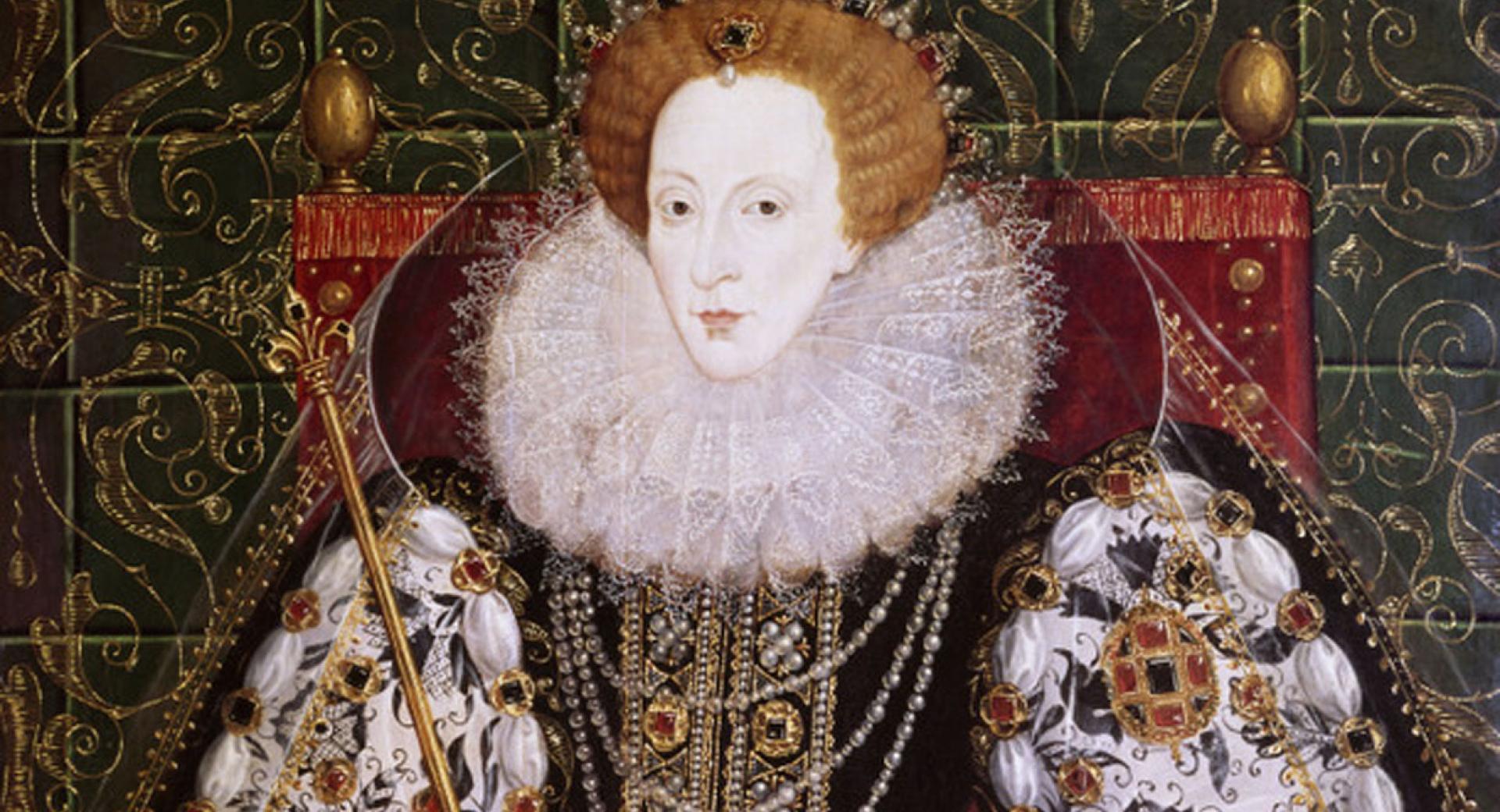
When the theatres opened again in 1594 he was prepared to astonish with even better dramas than had ever before graced the English stage. Queen Elizabeth frequently commissioned Shakespeare plays be presented to her at court. She would have seen her own country’s history depicted in the four-part chronologies of Henry VI (parts I-III) and Richard III as well as those of Richard II, Henry IV (parts I-II) and Henry V. Shakespeare learned very young how much the patriotic English loved watching their history unfold on stage. He also had to be extra careful how he depicted English royalty, it’s court, nobles and church.
Queen Elizabeth was especially fond of Shakespeare’s comedies and even commissioned him to write a play for her about Falstaff in love, which he completed in a mere two weeks and named The Merry Wives of Windsor. She was known to laugh uproariously during performances of Shakespeare’s comedies. She would have seen Taming of the Shrew, The Comedy of Errors, Love’s Labour’s Lost, A Midsummer Night’s Dream, Merchant of Venice, Much Ado About Nothing, As You Like It, Twelfth Night and All’s Well That Ends Well. She saw many of them numerous times and usually spoke directly and affectionately to ‘Master Shakespeare’ at the end of each performance. His great tragic works would mostly be written during the reign of King James I, but Elizabeth would have known Titus Andronicus, Romeo and Juliet and Hamlet. Twenty-five of his thirty-eight plays were written during the reign of Elizabeth, between approximately 1590 and 1603. That is twenty-five of some of the greatest plays ever written in just thirteen years, when Shakespeare was merely 26-39 years old.
It certainly helped that he was a member of a troupe of the most talented actors in all of England. Richard Burbage was the greatest lead actor of his age and he played most of Shakespeare’s most famous male characters. William Kemp and Robert Armin were exceptional comedic actors / clowns and the entire troupe could round off his plays with great dramatic skill. No doubt Shakespeare envisioned the individuals in Lord Chamberlain’s Men when he created specific characters and plays. As the Queen weakened with age, all of England held its collective breath and hoped for a smooth and civil transition and a competent and righteous new monarch. This had not often been the case in their recent history, which included Henry VIII, Bloody Mary and the various kings depicted in Shakespeare’s histories. There was great concern about the aged ‘Virgin Queen’ and the fear of a war of succession. However, when she died in 1603 power was peacefully conferred to James VI of Scotland, who became James I of England. Shakespeare’s Toupe was renamed ‘All the King’s Men’ and they performed regularly for the King as they had for the Queen.
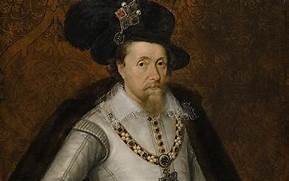
King James I adopted the famous poet, playwright and troupe with the title of ‘All the King’s Men’ and was more enthusiastic a patron than even Elizabeth had been. Not only did he command performances of all of the earlier Elizabethan productions but he also bore witness to the tide of tragic genius begun with Julius Caesar and Hamlet. He would see only one new English history play (Henry VIII), a new style of mythic romantic comedies in Measure for Measure, Pericles, The Winter’s Tale and The Tempest and the unprecedented and triumphant tragedies of Othello, Macbeth, King Lear, Antony and Cleopatra and Coriolanus. (Shakespeare actually wrote Macbeth with the new King in mind, knowing that James was obsessed with witches and Scottish folk lore and history.)
Shakespeare was at the summit of his magnificent powers in his early forties and King James was not unimpressed. The Kings Men performed 187 times before King James. While Shakespeare was preparing Macbeth in 1605, the nation was rocked by the November 5thGunpowder Plot, hatched by radical Catholics and intended to blow up the Parliament with the entire government present, including the King. The plan failed but the consequences were far reaching for English Catholics. Stratford was deeply affected, as the authorities circulated a list of 22 local persons, including Suzanna Shakespeare, who failed regularly to receive the Sunday Eucharist. The said fine was increased from 20 to 40 pounds. I imagine Shakespeare used his considerable influence at court to intervene on his daughter’s behalf, as she was exempt from all consequence.
In 1604 King James commissioned The King James Bible, a new translation reflective of the splendid English language of the Renaissance. It would be published in 1611. James gathered the very finest English writers of the day to contribute to what is still considered one of the great literary achievements of the age. While there is no official record of Shakespeare’s participation in this monumental enterprise, there is charming and titillating evidence of his presence on the project, discovered only in the 20thCentury. Shakespeare was 42years old in 1606. If you examine the King James Bible and turn to the Psalms (naturally, the greatest of all poets would be directed hence) you would perhaps notice in Psalm 42that the 42ndword from the beginning is ‘Shake’ and that the 42ndword from the end is ‘Spear’. It certainly appears that William Shakespeare, the master of wit, quietly and discreetly, as always, wrote himself into the King James Bible.
By the time Shakespeare wrote his final two tragedies (Coriolanus and Timon of Athens) in 1608 it is suggested that, at age 44, he was tiring, especially of the rigours of working in crowded, violent, dirty, riotous and plague-ridden London (where the life expectancy was under 30), and being expected to continue to produce at least a new masterpiece per year for his company of players. New plays were constantly in demand and he had already created thirty-three of them, 154 sonnets and several long poems in just eighteen years. He was clearly pining for the tranquility of Stratford, where he now tended to return with more frequency.
His final work, The Tempest, is often considered among his finest, if not his finest, work, with Prospero’s abdication of his magical powers and the freedom of his muse, Ariel. The Tempest is a new kind of play, intended to be his last, a farewell to both his art and his fans. These are the last words he ever wrote:
“Our revels are ended. These our actors, as I foretold you, were all spirits, and are melted into thin air: and like the baseless fabric of this vision, the cloud-capped towers, the gorgeous palaces, the solemn temples, the great Globe itself, yea, all which it inherits, shall dissolve, and, like this insubstantial pageant faded, leave not a rack behind. We are such stuff as dream are made on; and our little life is rounded with a sleep.”
William Shakespeare returned to Stratford, where he had begun. The Globe was rebuilt but Shakespeare lacked the energy to write a new play for the new theatre. Several of his London colleagues, including Robert Armin, passed away during this period. Having considerably exceeded the life expectancy of his day, especially in London, Will must have pondered what little time remained for him as well. Family, friends and local Stratford politics concerned Shakespeare at the age of 50, as he and Anne resumed their domestic life. After so much time apart he had returned home to her for good.
However, powerful events rocked his Stratford world in his waning years. He was likely exhausted. His actor brother Edmund had died (1607), his daughter Suzanne had given birth to a daughter (1608), his sister Joan became mother to a boy (1608), his mother died (1608), 1609 and 1610 were especially bad plague years, brother Gilbert died (1612), his only remaining brother, Richard, died (1613), the Globe Theatre burned to the ground during a performance of Henry VIII (1613), his daughter Judith married Thomas Quiney, who was immediately and publicly discovered to have impregnated a lowlife woman (1616) and his sister Joan’s husband died on April 16, 1616.
The burning of the Globe was likely the beginning of the end and the death of Joan’s husband may have sealed the deal, as he was dead six days later on April 23rd, 1616 – the day celebrated across England as the Feast of St George, also his 52ndbirthday. He lived his last years parentless, but a brother to Joan, a father to Judith and Suzanne, a grandfather, a husband to Anne and a friend to many.
A boy from a small English town who loved words and wrote plays. A teen age married boy who set out for London to make it in the big world. A man who found in himself the capacity to express our deepest feelings, our joys, sorrows, losses and love. He is a bridge between a world we have lost and the one we have become. He died a wealthy businessman, driven by his father’s failures.
He wanted to make money by creating art and filling theatres to see it. He chose his stories to appeal to all playgoers, groundlings and the aristocracy alike. He got in trouble at age 18 and went off to be successful. London would be his school where he wrote nearly two plays a year, first mostly histories and comedies and later incomparable tragedies. He created a world with every new play and believed that the world was a better place for a clown or a fool or two. The poet matures into a philosopher. He hides himself in his characters and is hard to find. Nonetheless, there are over 200 references to him, almost all favourable, in the literature of his times. Ben Johnson said simply, “I love the man. He was not just for an age, but for all time.” He made no attempt to publish his plays and nobody even attempted a biography until 1709.
The Life The Times
Mythical Time The Winter’s Tale (Sicily)
Around 800 BC King Lear (Britanniae)
Around 500 BC Coriolanus (Rome)
Around 400 BC Timon of Athens
The Comedy of Errors (Ephesus)
44 BC Julius Caesar (Rome)
Around 30 BC Antony and Cleopatra (Egypt and Rome)
10-14 AD Cymbeline (Ancient England)
Around 400-500 AD Titus Andronicus (Rome)
1016 The reign of King Edmund Ironside
1040-1057 The reign of Macbeth (Scotland)
1199-1215 The reign of King John
Around 1300-1500 Hamlet (Denmark)
1327-1377 The reign of Edward III
1377 Richard II is crowned the new monarch
1399 King Richard II is murdered
Henry IV is the new monarch
1413 Death of Henry IV
Henry V is the new monarch
1422 The death of Henry V
9 month old Henry VI is the new monarch
1471 Henry VI is murdered
Edward IV of York is crowned the new monarch
1483 Richard III is crowned the new monarch
1485 Richard III is killed.
Henry VII is the crowned the new monarch
1491 Henry VIII is born
1509. Henry VII dies
Henry VIII is crowned the new monarch
1516 Princess Mary is born to Henry VIII and Catherine
Of Aragon.
1533 Princess Elizabeth is born to King Henry VIII and
Anne Boleyn
1535 Henry VIII creates Protestant Church of England
1536 Anne Boleyn, Elizabeth’s mother, is beheaded
Henry VIII marries Jane Seymour
Princess Elizabeth is declared a bastard
1537 Jane Seymore dies in childbirth
but births the future King Edward VI
1540 Henry VIII marries Anne of Cleves
but the marriage is quickly annulled
Henry VIII marries Catherine Howard
1542 Catherine Howard is beheaded
1543 Henry VIII marries Katherine Parr
1547 Henry VIII dies
Protestant King Edward VI assumes the throne
1553 King Edward dies
Lady Jane Grey declared Queen
but deposed nine days later
Ultra Catholic Bloody Mary declared Queen
1554 Lady Jane Grey beheaded
Queen Mary marries Catholic Philip II of Spain
Princess Elizabeth imprisoned in the Tower for two
months
Elizabeth lived a very dangerous life as Princess and as Queen
Slept with a sword throughout her reign
1555 300 Protestants are burned at the stake
Philip returns to Spain
1556
Shakespeare’s Father John was an ale trader
1557
Father John elected to city council and married Mary Arden
1558
Father John made a constable Stratford begins preserving records
First child born: Joan, who died young Queen Mary dies
of plague Elizabeth is declared Queen
Hated by Catholic world, Rome, France, Spain, etc…
and English Catholics
1561
Father John town chamberlain
1562
Second child born: Margaret, Queen Elizabeth nearly dies of smallpox
died in 1st year
1564
Shakespeare is born (23 April). Very bad plague outbreak in Stratford.
on Saint George Day 20% births died within a month
He also dies on this day. Life expectancy in England: 47
Baptized on 26 April in affluent London: 35
in poorer London: 25
Christopher Marlow is born
Galileo is born
Michelangelo dies.
Calvin dies
1565 (age 1)
Father John is alderman
Stratford plague outbreak in Stratford.
Two-thirds of Stratford babies die
One-tenth of total population dies.
Shakespeare’s greatest achievement may not have been Hamlet but rather the fact that he
survived a terrible outbreak of the plague in his first two years of life
1566 (age 2)
Brother Gilbert born (died 1612, at age 46. London Haberdasher)
Future King James I born
1567 (age 3)
Mary Queen of Scots arrives in England
Her baby sn is King James VI of Scotland
Richard Burbage born, greatest actor of his day.
Thomas Nash born
Red Lion is first theatre to open in London
1568 (age 4)
Father John is Stratford mayor Mary Queen of Scots imprisoned by Queen Elizabeth
Father John denied Coat of Arms
1569 (age 5)
Will exposed to theatre in Stratford The Queen’s Men and The Earl of Worcester bring
His life and the Golden Age of theatre theatre to Stratford
match up perfectly Stratford a regular stop on theatres touring England
Sister Joan born. Died in 1646 in Stratford Queen Elizabeth a huge supporter of theatre
at age 77 Golden Age of Theatre: 1567-1642
50 million paid customers
10 times the population of England!
1570 (age 6)
Father twice accused of Usury Queen Elizabeth excommunicated from the Catholic
Church
1571 (age 7)
Sister Anne born. Died in 1579, at 8 years old
Will begins grammar school
6am-6pm, 6 days a week. School had very high standards.
(Like a university degree today in Latin and Rhetoric)
Headmaster paid 2x average.
All 3 teachers were Oxford Educated.
1572 (age 8)
Father accused of illegal wool trading Ben Johnson born
Bartholomew Day Massacre in Paris
8,000 Protestants murdered
Elizabeth had sworn to protect them
Fear of a French Catholic invasion
1573 (age 9)
The Earl of Leicester’s Men come to Stratford
1574 (age 10)
Brother Richard born. Died in 1613 at age 39 years
1575 (age 11)
The Earl of Warwick’s Men and The Earl of
Worcester’s Men come to Stratford
Queen Elizabeth visits Kenilworth, 12 miles from Stratford
1576 (age 12)
Father John’s financial status is poor The Theatre opens in London (a first)
1577 (age 13)
Father stops attending town meetings The Curtain Theatre opens in London
and returns to private life. Sir Francis Drake begins voyage around the
He quit city council world
Was he Catholic? Holinshed publishes ‘The Chronicles of England, Scotland
Good chance yes, and even more so, and Ireland’
Mary Arden, his wife, and much of Stratford.
Stratford was a hotbed of Catholicism
and the Government was cracking down
1578 (age 14)
Father sells off property for cash Stratford printer Richard Field moves to
Will finishes school to help Father London with new translated copies of
Plutarch’s Lives, Ovid’s Metamorphosis
and Holinshed’s Chronicles.
How did a grade six educated kid grow to be greatest writer ever? Tough question for many
1579 (age 15)
John Fletcher is born
1580 (age 16)
Brother Edmund is born. Died in 1607 Drake returns to England a hero
at age 27 years. He was a London actor
Father John is interviewed by the Queen’s agents to account for himself as a suspected Catholic
1581 (age 17)
Punishments for non-Church attendance become severe
Marlow attends Cambridge
1582 (age 18)
Will marries Anne Hathaway (8 years his senior)
(married by a Catholic priest) (read Sonnet 145. “Anne saved my life”)
She is 4 months pregnant
Will is poor, young and the head of a family
1583 (age 19)
Birth of daughter, Suzanne Mary Arden’s daughter married John Somerville, who
Suzanne died in 1649, at age 66 was a Catholic committed to killing the Queen.
Will lived with wife, mother and father, He was arrested, hanged, drawn, quartered and
four siblings and Suzanne. burned to death. Mary was pardoned.
The rest of the Ardens were interrogated
Edward Arden, head of the Arden family, was tortured on
the rack and hung, quartered and beheaded in the
Tower
The Queen’s Theatre Company formed in London
Greene earns masters at Cambridge
1584 (age 20)
Birth of twins, Hamnet and Judith Sir Walter Raleigh lands in Virginia
Hamnet died in 1596, age 12 years,
likely of plague
Judith dies in 1662, at age 78 years
Now 12 people in the house
Beginning of “Lost Years”, until 1592. He leaves Stratford around this time and winds up in London. Was he a tutor? A School Master? A Glover? A Law Clerk? An Actor? We do not know. Many speculations.
1585 (age 21)
1586-7 (age 22-23)
Mary Queen of Scot beheaded, implicated in
plot to overthrow the queen
Led to the launching of The Spanish Armada
The Rose Theatre built in London
Marlowe writes Tambelaine
Inspires Will to write Titus Andronicus, a similar
bloodbath
1588 (age 24)
The Spanish Armada is defeated
It seemed invincible
not one English ship lost
England’s finest hour
preserved Elizabethan Protestant England, its Empire,
the Renaissance and the theatre scene
HUGE HISTORY CHANGING VICTORY
Will’s histories will follow, celebrating the patriotism of the English
His history plays will be huge hits
Marlow wrote Faustus
1589 (age 25)
Marlow wrote The Jew of Malta, hugely successful
(Jews expelled from England in 1290)
Inspired Will to write Merchant of Venice
1590 (age 26)
Will likely wrote King John, Two Gentlemen of Verona and Henry VI, Pt I while touring with Lord
Chamberlain’s Men
1591 (age 27)
Father John sinking as Will rises. Christopher Wren born
Will starts sending money home to family
Likely wrote Comedy of Errors, Henry VI, Pt II and Henry VI, Pt III
1592 (age 28)
Will first mentioned as London actor and Plague closes London theatres for a few years
playwright
Father refuses to attend church Thomas Kyd wrote A Spanish Tragedy
Will began work on Sonnets during plague Robert Greene wrote a very critical review of
Wrote Venus and Adonis, his biggest success Will as ‘an upstart crow’ and then died
Reprinted ten times
Will not well received by ‘The Wits’
since he is not from Oxford or Cambridge
Likely wrote Richard III (first HUGE hit)
The first soliloquy
1593 (age 29)
Wrote The Rape of Lucrece Christopher Marlowe wrote Edward II
Likely wrote Taming of the Shrew Marlow is killed in a fight
and Loves Labours Lost
First original play
We have no idea where Will spent these two plague infested years, only
that he survived them… again.
1594 (age 30)
Wrote Titus Andronicus
Wrote A Midsummer Night’s Dream Dr Lopez, Queen’s Jewish Doctor, is brutally executed
(2nd original) HUGE HIT executed for treason. Will likely saw it
Wrote Richard II (Queen Eliz: ‘I am Richard II’). Lord Chamberlain’s Men is formed
She called him on it. THERE HE IS. Will will be a part of it for rest of career
1595 (age 31)
Likely wrote Romeo and Juliet (first blockbuster tragedy) (HUGE HIT)
Sends more and more money home
1596 (age 32)
Son Hamnet Dies of plague
Read sonnet 18 Blackfriar Theatre opens
Will granted Coat of Arms George Peele dies
Likely wrote Merchant of Venice Rene Descarte dies
(HUGE HIT)
(in response to Marlowe’s Sir Francis Drake dies
The Jew of Malta)
Henry IV, Pt 1 (HUGE HIT)
Falstaff
King John (painful scenes about the death of a son)
Act 3, Scene 4 THERE HE IS
1597 (age 33)
Will buys New Place Ben Johnson arrives on the scene
2nd largest home in Stratford
(18th C. owner destroyed it – hated the tourists)
He is a man of substance (left Stratford penniless)
Likely wrote Henry IV, Pt II. (HUGE HIT) and Merry Wives of Windsor (Commissioned by the Queen)
1598 (age 34)
Will’s name mentioned as a hoarder of 80 bushels of malt
Will listed as a tax defrauder
Likely wrote Much Ado About Nothing. (Early plays mostly Histories and Comedies… most
tragedies to come later)
1599 (age 35)
Wrote The Passionate Pilgrim The Globe Theatre opens (1-3 pennies)
Likely wrote Henry V. (HUGE HIT)
Wrote Julius Caesar (HUGE HIT) Will Kemp, the clown / fool left the troupe
1600 (age 36)
Likely wrote Hamlet (BIGGEST HIT) London population: 200,000
A pivot in his life The Fortune Theatre opens
A new level, even for Shakespeare. Charter for the East India Company
Changed theatre forever
Astonishing genius followed
As You Like It (HUGE HIT) a swan song for gaity
1601 (age 37)
Will’s father dies Thomas Nashe dies
Likely wrote Twelfth Night (HUGE HIT). Playwright and most famous Pamphleteer
(a girl who believes that her twin brother has died). THERE HE IS
He is wildly successful at this point
1602 (age 38)
Will purchases over 100 acres in Stratford
Likely wrote Troilus and Cressida and All’s Well That Ends Well
1603 (age 39).
Likely wrote Othello (HUGE HIT) Queen Elizabeth dies (69 yrs old). End of Tudors.
James VI of Scotland becomes James I of Eng
Son of Mary, Queen of Scots
Was king In Scotland for 20 years
Will be king of England for 22 years
Lord Chamberlain’s Men became All the King’s
Men
James loved theatre and Shakespeare as the
Queen did.
The King’s Men put on 187 performances for
James
Plague closes theatres in London
1604 (age 40)
Likely wrote Measure for Measure
1605 (age 41)
Likely wrote King Lear (HUGE HIT) The Gunpowder Plot (Guy Fawkes)
November 5th
Catholics tried to blow up the Parliament
They would be hunted down
Shakespeare would have known many of them
The bitter end of Catholic England
“Kings are Gods on earth and writers should
not mettle with their deepest mysteries”
KIng James
But he let Shakespeare produce King Lear,
which James saw repeatedly
1606 (age 42)
Likely wrote Macbeth (HUGE HIT) Rembrandt born
(Short Scottish play with witches for King James)
About the mind of the murderer of a King, written specifically for the King
Will buries the play in ancient history
Wrote Timon of Athens.
Co-authored with Thomas Middleton.
1607 (age 43)
Daughter Suzanne marries Dr John Hall Jamestown, Virginia founded
Likely wrote Antony and Cleopatra (HUGE HIT)
Pericles
Co-authored with George Wilkins
Brother Edmund dies
1608 (age 44)
Mother dies (Mary Arden) Blackfriar Theatre opens
Daughter Suzanne births Elizabeth All the King’s Men are now indoors, playing
Grandpa Will to a wealthy audience
Likely wrote Coriolanus John Milton born
His later plays were less popular, Plague closes London theatres
very dense and more introverted.
His output was slowing down
He seemed nearly done
1609 (age 45)
Sonnets published
Regarded by many as his greatest achievement
1-126: the fair youth
127-154: the dark lady
Autobiographical???????
Likely wrote Cymbeline
1610 (age 46)
Ben Johnson wrote The Alchemist
1611 (age 47)
Likely wrote The Winter’s Tale King James Bible published (1604-11)
Wrote The Tempest (3rd original) The greatest literary achevement of the age,
HUGE FAREWELL) along with the works of Shakespeare
(Read Act 4, I, 147-163, Act 5, I, 50-57 James had the greatest poets and writers
and Act 5, I, 95-96, Epilogue contribute to it.
About a daughter who marries Examine Psalm 46. W.S is 46 years old
A daughter who marries and then he 46th word in is Shake
throws away his magic and releases 46th word from bottom is spear
his muse and retires home He wrote himself into the bible!!!!
Storms are in all his later plays Not discovered until 20th century
Brother Gilbert dies
1612 (age 48)
1613 (age 49)
Buys London property near Blackfriars The Globe burns down
Brother Richard dies a spark from Henry VIII premiere
Likely wrote Two Noble Kinsmen and Henry VIII (All is True)
(His last 3 plays are about fathers and daughters)
Both plays Co-authored with John Fletcher
Will retires to Stratford (when Globe burns down)
1614 (age 50)
The Globe is re-built. (7 Stages of Man Speech, part 6)
1615 (age 51)
1616 (age 52)
Daughter Judith marries Thomas Quiney Cervantes dies
He has affair and fathers another woman’s child.
A full blown Stratford scandal
Sister Joan’s husband dies
Will rewrites his own will.
(25 March)
Total worth: 1,000 pounds
Most left to daughter Suzanne
Lives till 1649 – 66 yrs old
Daughter Judith lives till 1662 – 77 years old
Grand daughter Elizabeth
lived until 1670. End of the line
Wife, Anne, gets second best bed (she had dowry rights)
Will gets ill following a lively night of Rhennish Wine and Pickled Herring with Ben Johnson
and company
Will dies on 23 April, St George’s Day, the same date he was born
“Good friend. For Jesus sake forebear to dig the dust enclosed here.
Blessed be ye man who spares these stones and cursed be he that moves
my bones”
Alas poor Shakespeare (Hamlet, Yorick)
1623
Publication of the 1st Folio
Plays not published in his lifetime. Performed and let go. Typical of the age
A labour of love from his two actor friends in All The Kings Men
John Heminges and Henry Condell
18 unpublished plays / 37 plays total
Had they not gone to such considerable trouble these 18 plays would be lost to us.
“We have collected his plays without ambition, self-profit or fame, only to
keep the memory of so worthy a friend and fellow alive, as was our Shakespeare.”
They would know best 2,000 + plays written during Will’s lifetime. 220 survived, including nearly all of his.
 William Shakespeare: Journey Through Genius